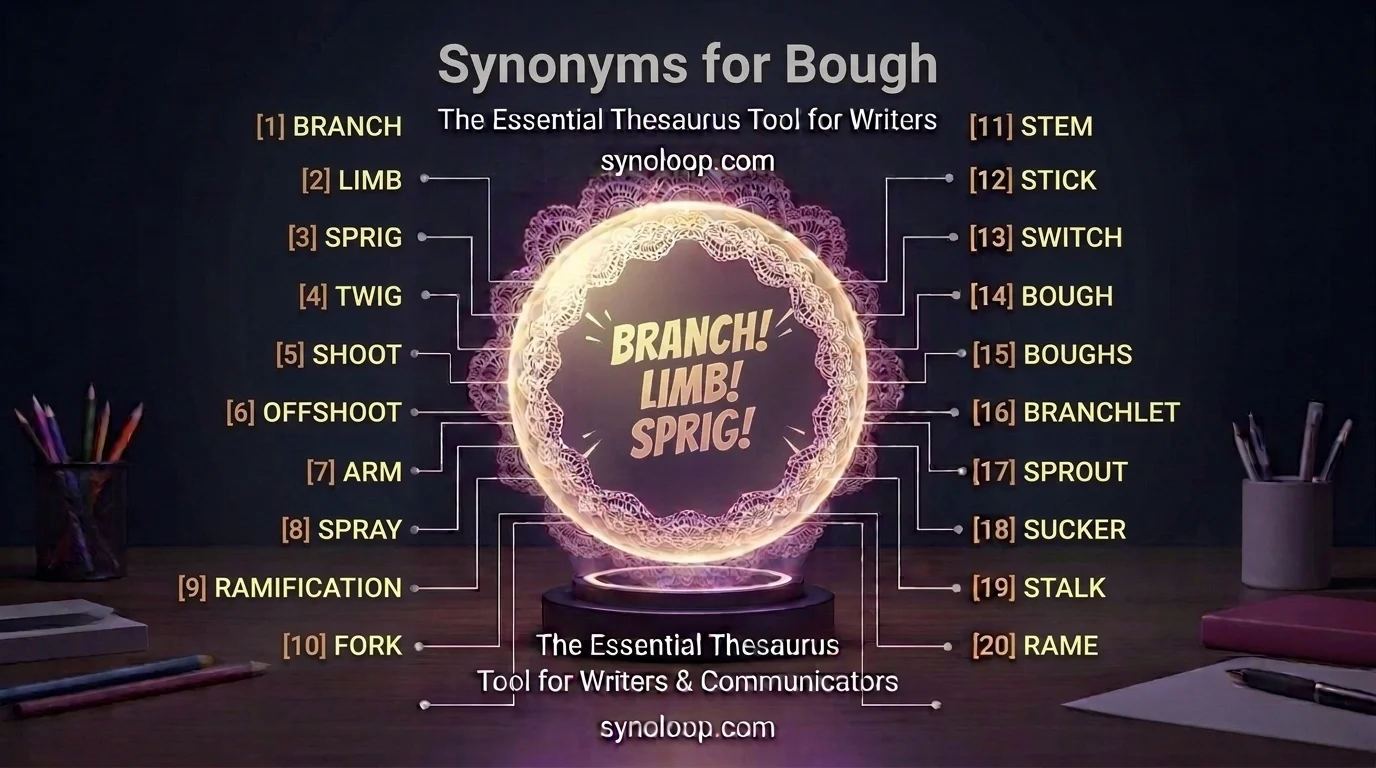
The word bough refers to a large, strong branch of a tree, especially one that grows directly from the trunk or another major branch. It is a common word in descriptive writing, poetry, literature, and nature-related contexts. Learning synonyms for bough can help you describe trees more precisely and avoid repeating the same word.
Although many words are related to bough, they are not always perfect substitutes. Some refer to a large branch, while others describe smaller branches, twigs, or the overall structure of a tree. Choosing the right word depends on the size, shape, and context of the branch you are describing.
Understanding these distinctions is especially useful for students, ESL learners, writers, and content creators who want their vocabulary to sound natural and accurate.
What Does “Bough” Mean?
A bough is a large branch of a tree. It usually suggests a substantial branch rather than a thin twig.
Simple meaning:
A bough is a large branch growing from a tree.
Example:
The children sat beneath the wide bough of an old oak tree.
The word bough often has a slightly literary, poetic, or traditional tone. You are more likely to see it in novels, poems, nature writing, and descriptive passages than in casual everyday conversation.
Is “Bough” a Positive, Negative, or Neutral Word?
Bough is a neutral word. It does not normally express a positive or negative feeling.
However, it can create a natural, poetic, or literary atmosphere. For example, “under the leafy boughs” sounds more descriptive and artistic than “under the branches.”
30 Synonyms for Bough
The best synonym depends on what you mean by bough. Some alternatives describe a large branch, while others refer to smaller branches or parts of a tree.
1. Branch
Meaning: A part of a tree that grows from the trunk or another branch.
Example:
A bird landed on a sturdy branch.
Best usage context: Everyday speech and general writing.
2. Limb
Meaning: A large main branch of a tree.
Example:
The heavy limb broke during the storm.
Best usage context: When referring to a large, strong tree branch.
3. Tree Limb
Meaning: A large branch extending from a tree trunk.
Example:
The gardener removed a damaged tree limb.
Best usage context: Clear, practical, and everyday descriptions.
4. Large Branch
Meaning: A branch that is bigger and stronger than smaller branches or twigs.
Example:
A large branch stretched across the garden.
Best usage context: Simple explanations and beginner-friendly writing.
5. Offshoot
Meaning: A smaller part that grows from a main stem, branch, or structure.
Example:
A new offshoot appeared near the base of the plant.
Best usage context: Plants, gardening, and figurative writing.
6. Shoot
Meaning: A new growth that develops from a plant or tree.
Example:
Fresh shoots appeared after the spring rain.
Best usage context: Gardening and botanical descriptions.
7. Twig
Meaning: A small, thin branch of a tree or shrub.
Example:
She picked up a dry twig from the ground.
Best usage context: When the branch is much smaller than a bough.
8. Sprig
Meaning: A small branch or stem, often with leaves or flowers.
Example:
He placed a sprig of greenery on the table.
Best usage context: Small decorative branches and plants.
9. Stem
Meaning: The main supporting part of a plant or a plant structure.
Example:
The flower had a long, slender stem.
Best usage context: Plants and botanical descriptions.
10. Stalk
Meaning: A slender supporting part of a plant.
Example:
The leaves grew from a tall stalk.
Best usage context: Plants, flowers, and grasses rather than large tree branches.
11. Ramus
Meaning: A branch-like structure, especially in scientific or botanical terminology.
Example:
The botanist examined each ramus carefully.
Best usage context: Scientific, botanical, or technical writing.
12. Fork
Meaning: A point where a branch divides into two or more parts.
Example:
The bird rested at the fork of the tree.
Best usage context: Describing branching structures.
13. Forked Branch
Meaning: A branch that divides into separate sections.
Example:
The fox disappeared behind a forked branch.
Best usage context: Detailed descriptions of tree shapes.
14. Branchlet
Meaning: A small branch growing from a larger branch.
Example:
Tiny leaves covered every branchlet.
Best usage context: Botanical and descriptive writing.
15. Twiglet
Meaning: A very small or delicate twig.
Example:
The nest was supported by several thin twiglets.
Best usage context: Detailed nature descriptions.
16. Spray
Meaning: A small group of branches, leaves, or flowers extending from a plant.
Example:
A spray of blossoms hung over the wall.
Best usage context: Flowers, decorative plants, and poetic descriptions.
17. Bough
Meaning: A large branch of a tree.
Example:
The owl perched on a thick bough.
Best usage context: Literary, poetic, and nature writing.
18. Tree Branch
Meaning: A branch that grows from the trunk or another major branch of a tree.
Example:
The cat climbed onto a tree branch.
Best usage context: Clear everyday communication.
19. Main Branch
Meaning: A major branch that supports smaller branches.
Example:
The nest was hidden along the main branch.
Best usage context: When emphasizing the size or importance of a branch.
20. Secondary Branch
Meaning: A branch that grows from a larger main branch.
Example:
Several secondary branches extended toward the sunlight.
Best usage context: Botanical, gardening, and technical descriptions.
21. Lateral Branch
Meaning: A branch that grows outward from a central stem or main branch.
Example:
The lateral branches spread widely across the tree.
Best usage context: Botanical and scientific writing.
22. Branching
Meaning: The arrangement or process of dividing into branches.
Example:
The tree had an impressive branching structure.
Best usage context: Describing the overall shape rather than one specific branch.
23. Branchwork
Meaning: A network or arrangement of branches.
Example:
Sunlight filtered through the dense branchwork above.
Best usage context: Descriptive and literary writing.
24. Canopy Branch
Meaning: A branch located within or forming part of a tree’s upper canopy.
Example:
A squirrel moved quickly along a canopy branch.
Best usage context: Nature writing and descriptions of forest trees.
25. Bough-like Limb
Meaning: A large limb resembling a traditional tree bough.
Example:
The old tree had several enormous bough-like limbs.
Best usage context: Descriptive writing when emphasizing size and appearance.
26. Woody Branch
Meaning: A hard, wood-covered branch of a plant or tree.
Example:
The woody branch supported several clusters of leaves.
Best usage context: Botanical and practical descriptions.
27. Tree Limb Branch
Meaning: A substantial branch extending from a tree’s trunk or larger limb.
Example:
The tree limb branch reached over the pathway.
Best usage context: General descriptive writing, although “branch” or “limb” is usually more natural.
28. Branching Limb
Meaning: A large limb that divides into smaller branches.
Example:
The monkey climbed along the branching limb.
Best usage context: Detailed descriptions of trees and wildlife.
29. Woody Offshoot
Meaning: A woody growth that develops from a larger plant structure.
Example:
A woody offshoot grew from the old trunk.
Best usage context: Gardening and botanical descriptions.
30. Tree Growth
Meaning: A general term for new or existing growth on a tree, including branches.
Example:
The gardener carefully examined the tree growth.
Best usage context: General gardening or botanical discussions; it is broader than “bough.”
Quick Comparison of Synonyms for Bough
| Synonym | Size/Meaning | Tone | Best Use |
| Branch | General tree part | Neutral | Everyday writing |
| Limb | Large branch | Neutral | Large tree branches |
| Tree limb | Large branch | Practical | Everyday descriptions |
| Twig | Small branch | Neutral | Small branches |
| Sprig | Small branch/stem | Gentle | Plants and decoration |
| Branchlet | Small branch | Technical | Botanical writing |
| Shoot | New growth | Neutral | Gardening |
| Offshoot | New growth | Neutral | Plants and figurative use |
| Ramus | Branch-like structure | Technical | Scientific writing |
| Spray | Group of small branches | Literary | Flowers and decoration |
| Lateral branch | Side branch | Technical | Botany |
| Main branch | Major branch | Neutral | Tree structure |
| Secondary branch | Smaller major branch | Technical | Tree structure |
| Branchwork | Network of branches | Literary | Descriptive writing |
| Canopy branch | Upper tree branch | Descriptive | Forest and nature writing |
Bough vs. Branch: What Is the Difference?
Bough and branch are closely related, but they are not always interchangeable in tone.
Branch is the more common and general word. It can describe branches of many sizes.
Bough usually suggests a large or substantial branch, and it often sounds more literary or poetic.
Compare:
The bird sat on a branch.
This is simple and natural.
The bird sat on a massive bough.
This creates a more vivid and literary image.
Bough vs. Limb
Limb is another strong synonym for a large tree branch.
The word limb is common in everyday descriptions, especially when discussing tree maintenance, falling branches, or storm damage.
Bough, on the other hand, often appears in literary or poetic descriptions.
The storm damaged a large limb.
The moon shone through the ancient boughs.
Both words can refer to large branches, but the surrounding tone is different.
Bough vs. Twig
These words describe very different sizes.
A bough is large and substantial.
A twig is small and thin.
For example:
The eagle perched on a sturdy bough.
The bird collected twigs for its nest.
Using “twig” when you mean a large branch would make the description inaccurate.
Bough vs. Offshoot
An offshoot generally describes something that grows from a larger structure. It can refer to plant growth, but it can also be used figuratively.
For example:
A new offshoot grew from the old plant.
Because “offshoot” emphasizes something developing from another part, it is not always a direct replacement for bough.
How to Choose the Right Synonym for Bough
Choosing the right synonym depends mainly on size, context, and tone.
For Everyday English
Use:
- Branch
- Tree branch
- Limb
- Tree limb
- Large branch
These are straightforward and easy to understand.
For Large Tree Branches
Use:
- Limb
- Tree limb
- Main branch
- Large branch
- Branching limb
These choices work well when size and strength matter.
For Small Branches
Use:
- Twig
- Sprig
- Branchlet
- Twiglet
- Shoot
These words are better when describing thin or newly developed growth.
For Botanical Writing
Use:
- Ramus
- Lateral branch
- Secondary branch
- Branchlet
- Shoot
- Offshoot
These terms are useful when accuracy and technical detail are important.
For Literary or Poetic Writing
Use:
- Bough
- Spray
- Branchwork
- Bough-like limb
These can create a more visual or atmospheric description.
Common Phrases With Bough
Learning common phrases can make your vocabulary more natural.
Under the Boughs
This means beneath the large branches of trees.
We rested under the boughs on a warm afternoon.
From Bough to Bough
This describes movement from one large branch to another.
The squirrel leaped from bough to bough.
Heavy Boughs
This refers to large branches that are weighed down, often by leaves, fruit, or snow.
Heavy boughs hung low after the snowfall.
Leafy Boughs
This describes branches covered with leaves.
Sunlight filtered through the leafy boughs.
Common Mistakes When Using Synonyms for Bough
One common mistake is treating every branch-related word as an exact synonym. They often describe different parts of a plant.
For example, twig is much smaller than a bough. Similarly, stem is more commonly used for flowers and plants, while limb usually suggests a substantial tree branch.
Another mistake is ignoring tone. Branch works naturally in almost any everyday situation, while bough can sound more literary. Choosing a word that matches your writing style makes the sentence feel more natural.
Why Vocabulary Variety Matters
Using different words can make writing clearer and more engaging. However, vocabulary variety should not mean replacing every familiar word with an unusual synonym.
If you are writing a simple sentence, branch is often the best choice. If you are creating a poetic description of an old tree, bough may create a stronger image.
The goal is not to use the most complicated word. The goal is to use the most accurate word for the situation.
Frequently Asked Questions About Bough Synonyms
What is the closest synonym for bough?
Branch is the closest general synonym for bough. Limb is also a close choice when referring specifically to a large tree branch.
Is limb another word for bough?
Yes, limb can be used for a large tree branch and is often a practical alternative to bough.
What is the opposite of a bough?
There is no exact opposite of bough. If you are contrasting it with a smaller tree part, twig is sometimes used because it refers to a much smaller branch.
Is twig a synonym for bough?
Not exactly. A twig is a small, thin branch, while a bough generally refers to a large branch.
Is bough a formal word?
Bough is not necessarily formal, but it has a literary and poetic feel and appears frequently in descriptive writing and literature.
What is another word for a large tree branch?
Common choices include limb, tree limb, main branch, and large branch.
What is a poetic word for branch?
Bough is one of the most common poetic or literary words for a large tree branch.
What is the plural of bough?
The plural of bough is boughs.
Conclusion
The best synonym for bough depends on what you want to describe. Branch is the simplest and most versatile choice, while limb works especially well for large tree branches. Words such as twig, sprig, and branchlet are better for smaller growth, while technical terms such as ramus and lateral branch suit botanical writing.
For literary and descriptive writing, bough itself remains a useful word because it can create a natural, traditional, and poetic image. Instead of choosing a synonym simply to avoid repetition, consider the size of the branch, the context, and the tone you want to create.
A strong vocabulary is not about using complicated words. It is about choosing the word that communicates your meaning most clearly.

I am Axel James, a passionate writer who loves exploring synonyms and alternative words. I enjoy helping readers improve their vocabulary and express ideas clearly.