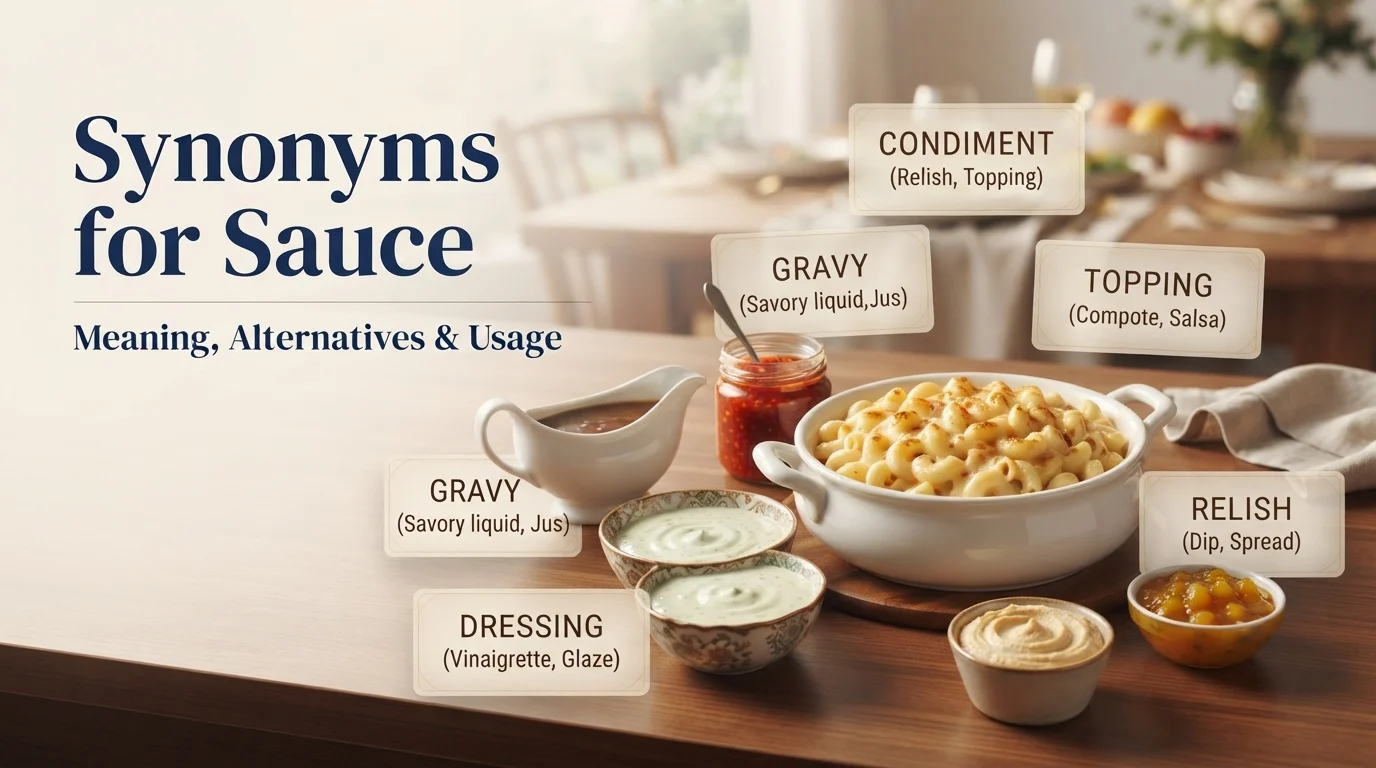
When looking for synonyms for sauce, it helps to remember that there is no single word that works perfectly in every situation. The right alternative depends on what you mean by sauce: a liquid served with food, a flavorful topping, a cooking mixture, or even a figurative “extra” that makes something more interesting.
Using the right vocabulary can make your writing more precise and natural. Students, ESL learners, food writers, bloggers, and content creators can use different sauce-related words to describe flavor, texture, ingredients, and culinary purpose more clearly.
What Does “Sauce” Mean?
A sauce is usually a liquid, semi-liquid, or creamy food mixture served with or added to another food. It is often used to add flavor, moisture, richness, color, or texture.
For example, tomato sauce can be served with pasta, gravy can accompany meat and potatoes, and a dressing can be poured over a salad. Some sauces are thick and creamy, while others are thin, spicy, sweet, tangy, or savory.
The word sauce can also be used informally. In phrases such as “secret sauce,” it can describe a special ingredient, quality, method, or advantage that makes something successful.
30 Synonyms for Sauce
Below are 30 useful alternatives and closely related words. Some are direct culinary alternatives, while others describe specific types or functions of sauce.
1. Gravy
Meaning: A savory liquid or semi-liquid mixture usually served with meat, vegetables, potatoes, or other foods.
Example:
She poured warm gravy over the mashed potatoes.
Best usage context:
Use “gravy” for savory sauces commonly served with meat or potatoes.
2. Dressing
Meaning: A liquid or creamy mixture added to salads or certain dishes for flavor.
Example:
He chose a lemon dressing for his green salad.
Best usage context:
Best for salad toppings and some cold dishes.
3. Dip
Meaning: A thick or creamy food mixture used for dipping other foods into.
Example:
We served a spicy dip with the tortilla chips.
Best usage context:
Use “dip” when food is physically dipped into the mixture.
4. Condiment
Meaning: A food added to another dish to improve or enhance its flavor.
Example:
Mustard is a popular condiment for sandwiches.
Best usage context:
Useful as a broad term for sauces, spreads, and flavor-enhancing additions.
5. Topping
Meaning: Food placed on top of another food.
Example:
The chef added a chocolate topping to the dessert.
Best usage context:
Use when the sauce or mixture is placed over food rather than mixed into it.
6. Spread
Meaning: A soft or creamy food that can be spread over bread, crackers, or other foods.
Example:
The garlic spread gave the bread a rich flavor.
Best usage context:
Best for thicker sauces and creamy mixtures used on bread or similar foods.
7. Marinade
Meaning: A seasoned liquid used to flavor or tenderize food before cooking.
Example:
The chicken was left in a spicy marinade overnight.
Best usage context:
Use for liquid mixtures in which meat, vegetables, or other ingredients are soaked before cooking.
8. Glaze
Meaning: A thin, shiny coating placed on food to add flavor and appearance.
Example:
The chef brushed a honey glaze over the roasted carrots.
Best usage context:
Ideal for sweet, savory, or shiny coatings applied to food.
9. Purée
Meaning: Food that has been blended until it becomes smooth and thick.
Example:
The chef served a smooth tomato purée with the fish.
Best usage context:
Use when the sauce has a smooth texture created by blending ingredients.
10. Coulis
Meaning: A thin, smooth sauce made from puréed fruits or vegetables.
Example:
A raspberry coulis was served beside the cheesecake.
Best usage context:
Common in restaurant and culinary writing, especially for refined presentations.
11. Reduction
Meaning: A liquid that has been cooked down so that it becomes thicker and more concentrated.
Example:
The steak was served with a red wine reduction.
Best usage context:
Useful in professional cooking and culinary descriptions.
12. Salsa
Meaning: A mixture, often containing chopped vegetables, fruits, herbs, and seasonings, used as an accompaniment.
Example:
Fresh tomato salsa added a bright flavor to the tacos.
Best usage context:
Best for Mexican-inspired and Latin American dishes or fresh chopped mixtures.
13. Relish
Meaning: A seasoned mixture of chopped vegetables or fruits used to add flavor to food.
Example:
She added cucumber relish to the hot dog.
Best usage context:
Common with sandwiches, hot dogs, burgers, and grilled foods.
14. Chutney
Meaning: A thick, flavorful mixture made from fruits, vegetables, herbs, spices, or other ingredients.
Example:
The mango chutney added sweetness and spice to the curry.
Best usage context:
Particularly useful when describing South Asian and other spiced accompaniments.
15. Pesto
Meaning: A thick sauce traditionally made with basil, garlic, nuts, cheese, and olive oil.
Example:
She mixed fresh pesto into the pasta.
Best usage context:
Use when referring specifically to pesto-style sauces.
16. Salsa Verde
Meaning: A green sauce typically made with herbs, green vegetables, or green chilies.
Example:
The tacos were served with a fresh salsa verde.
Best usage context:
Useful for Mexican and other dishes featuring green savory sauces.
17. Aioli
Meaning: A creamy sauce traditionally associated with garlic and oil, often prepared similarly to mayonnaise.
Example:
The restaurant served garlic aioli with the fries.
Best usage context:
Best for creamy garlic-based accompaniments.
18. Mayonnaise
Meaning: A thick, creamy sauce made primarily from oil and egg yolk, often flavored with other ingredients.
Example:
He added mayonnaise to the sandwich.
Best usage context:
Use when the specific sauce is mayonnaise or a mayonnaise-based mixture.
19. Ketchup
Meaning: A sweet and tangy tomato-based condiment.
Example:
The children dipped their fries in ketchup.
Best usage context:
Best for burgers, fries, sandwiches, and similar foods.
20. Mustard
Meaning: A sharp-tasting condiment made from mustard seeds and other ingredients.
Example:
She spread mustard on her sandwich.
Best usage context:
Useful when referring to mustard-based condiments and sauces.
21. Paste
Meaning: A thick mixture made by combining or grinding ingredients into a dense consistency.
Example:
The cook added a chili paste to the curry.
Best usage context:
Best for thick, concentrated mixtures used in cooking.
22. Mixture
Meaning: A combination of different ingredients blended or combined together.
Example:
The chef prepared a flavorful mixture of herbs and tomatoes.
Best usage context:
A general term when you do not need to identify the exact type of sauce.
23. Accompaniment
Meaning: Food served alongside another dish to add flavor or variety.
Example:
The mint sauce was a refreshing accompaniment to the meal.
Best usage context:
Useful in formal food writing and restaurant descriptions.
24. Topping Sauce
Meaning: A sauce specifically added over the surface of a finished dish.
Example:
The chef used a berry sauce as a topping for the pancakes.
Best usage context:
Use when emphasizing that the sauce is placed on top of food.
25. Flavoring
Meaning: An ingredient or substance used to give food a particular taste or aroma.
Example:
The herb mixture provided a strong flavoring for the dish.
Best usage context:
Useful when focusing on the flavor-enhancing function rather than the sauce itself.
26. Seasoning
Meaning: An ingredient or combination of ingredients used to improve the taste of food.
Example:
The spicy seasoning gave the dish a richer flavor.
Best usage context:
Use when the main purpose is adding flavor rather than providing a liquid accompaniment.
27. Drizzle
Meaning: A small amount of liquid sauce poured lightly over food.
Example:
The chef finished the dessert with a caramel drizzle.
Best usage context:
Excellent for describing sauces artistically added to the surface of food.
28. Syrup
Meaning: A thick, sweet liquid often used with desserts, breakfast foods, or drinks.
Example:
She poured maple syrup over the pancakes.
Best usage context:
Use for sweet, pourable sauces and toppings.
29. Jus
Meaning: A thin, flavorful meat-based liquid, often made from cooking juices.
Example:
The roast beef was served with a rich jus.
Best usage context:
Common in professional culinary writing and fine-dining descriptions.
30. Saucepan Mixture
Meaning: A cooked combination of ingredients prepared together to create a flavorful liquid or semi-liquid accompaniment.
Example:
The cook prepared the saucepan mixture before serving the vegetables.
Best usage context:
Use only when describing a cooked mixture rather than as a direct dictionary replacement for “sauce.”
Quick Comparison of Sauce Synonyms
| Word | Main Meaning | Typical Use |
| Gravy | Savory liquid | Meat, potatoes |
| Dressing | Flavorful liquid | Salads |
| Dip | Thick accompaniment | Chips, vegetables |
| Condiment | Flavor enhancer | Burgers, sandwiches |
| Topping | Food placed on top | Desserts, pancakes |
| Marinade | Seasoned soaking liquid | Meat, vegetables |
| Glaze | Shiny coating | Meat, vegetables, desserts |
| Purée | Smooth blended mixture | Fine cooking |
| Coulis | Smooth fruit/vegetable sauce | Desserts, plated dishes |
| Reduction | Concentrated cooked liquid | Meat, fine dining |
| Salsa | Chopped fresh mixture | Tacos, chips |
| Relish | Seasoned chopped mixture | Hot dogs, burgers |
| Chutney | Spiced fruit/vegetable mixture | Curries, snacks |
| Pesto | Herb-and-oil sauce | Pasta |
| Aioli | Creamy garlic sauce | Fries, seafood |
| Paste | Thick concentrated mixture | Curries, cooking |
| Accompaniment | Food served alongside | Formal food writing |
| Drizzle | Light amount of sauce | Desserts, salads |
| Syrup | Sweet thick liquid | Pancakes, desserts |
| Jus | Thin meat-based liquid | Roasted meat |
Sauce vs. Gravy
“Sauce” is a broad term, while “gravy” usually refers to a savory accompaniment made from meat juices, stock, or other flavorful ingredients.
For example, tomato sauce is not normally called gravy in standard English. On the other hand, a brown liquid served with roast meat may naturally be called gravy.
In American English, some communities also use “gravy” for certain tomato-based pasta sauces, but this is a regional usage rather than a universal replacement for “sauce.”
Sauce vs. Dressing
A dressing is usually associated with salads.
For example:
- Caesar dressing
- Ranch dressing
- Italian dressing
However, “sauce” is much broader and can refer to liquid or semi-liquid accompaniments used with meat, pasta, vegetables, seafood, and desserts.
So, calling a salad topping a “dressing” is usually more precise than simply calling it a sauce.
Sauce vs. Condiment
A condiment is a broad category that includes many sauces and other flavor-enhancing foods.
Ketchup, mustard, mayonnaise, relish, and some hot sauces can all function as condiments.
Therefore, “condiment” is useful when you want to focus on the purpose of the food rather than its exact consistency or ingredients.
Sauce vs. Dip
The main difference is how the food is used.
A dip is generally designed for another food to be dipped into it. For example, hummus can be used as a dip with bread or vegetables.
A sauce is more commonly poured over, mixed into, or served alongside a dish.
The distinction is not always strict, because some foods can function as both sauces and dips.
Sauce vs. Glaze
A glaze is usually applied as a coating.
For example, a honey glaze can be brushed onto roasted vegetables or meat. It may become shiny as it cooks.
A sauce, by comparison, may be poured over food, served beside it, or mixed into it.
Sauce vs. Marinade
A marinade is primarily used before cooking.
Food is placed into a marinade so that it can absorb flavor and, depending on the ingredients, become more tender.
A sauce is more commonly served during or after cooking, although some sauces can also be used as marinades.
Sauce vs. Topping
A topping describes where or how something is used rather than its exact ingredients.
Chocolate sauce can be a topping for ice cream. Caramel sauce can be a topping for pancakes. A fruit coulis can be a topping for cheesecake.
Therefore, “topping” is broader in function, while “sauce” describes the type or form of the food.
How to Choose the Right Synonym for Sauce
Choosing the right synonym depends on what you are trying to describe.
For Meat and Savory Meals
Use words such as:
- Gravy
- Jus
- Reduction
- Glaze
- Accompaniment
These words work particularly well when describing meat, roasted foods, and formal dishes.
For Salads
Use:
- Dressing
- Drizzle
- Vinaigrette
“Dressing” is usually the most natural general choice for salad.
For Dipping
Use:
- Dip
- Condiment
- Salsa
- Chutney
These terms work well when the food is served separately and used to add flavor.
For Sweet Foods
Use:
- Syrup
- Glaze
- Drizzle
- Coulis
- Topping
These choices are useful for pancakes, waffles, ice cream, cheesecake, pastries, and other desserts.
For Professional Culinary Writing
Use more specific terms such as:
- Coulis
- Reduction
- Jus
- Purée
- Glaze
- Emulsion
These words can make restaurant menus, recipes, and culinary articles more precise.
For Simple Everyday English
If your audience consists of beginners or ESL learners, straightforward words are usually best:
- Sauce
- Gravy
- Dip
- Dressing
- Topping
- Condiment
These terms are easy to understand and widely used.
How to Use Sauce Synonyms Naturally in Writing
Good vocabulary is not simply about replacing a common word with a more complicated one. The replacement should accurately communicate the intended meaning.
For example, instead of writing:
The chef added a sauce to the salad.
you could write:
The chef added a creamy dressing to the salad.
The second sentence gives the reader more information.
Similarly:
The chef served the meat with a sauce.
can become:
The chef served the meat with a rich jus.
The word “jus” provides a more specific culinary description.
Common Mistakes When Using Sauce Synonyms
One common mistake is treating every sauce-related word as a perfect synonym. Words such as marinade, dressing, dip, and glaze have specific meanings.
Another mistake is using advanced culinary terms simply to sound sophisticated. If your readers are beginners, “sauce” may be clearer than “coulis” or “reduction.”
Context is also important. A word that sounds natural in a restaurant review may feel unusual in casual conversation.
The best synonym is therefore the one that communicates the intended meaning clearly and naturally.
Frequently Asked Questions About Synonyms for Sauce
What is the best synonym for sauce?
There is no single best synonym for every context. “Gravy,” “dressing,” “dip,” “condiment,” “glaze,” and “marinade” are appropriate in different situations.
What is another word for sauce in cooking?
Depending on the type of preparation, you can use words such as gravy, dressing, glaze, reduction, purée, coulis, condiment, or accompaniment.
What is a fancy word for sauce?
In culinary writing, words such as coulis, reduction, jus, and emulsion can describe specific types of sauces or sauce-like preparations.
What is a synonym for sauce on food?
“Topping,” “drizzle,” “dressing,” or “condiment” may work depending on how the sauce is being used.
Is gravy a synonym for sauce?
Gravy is a type of sauce, but the two words are not always interchangeable. Gravy generally refers to a savory accompaniment, particularly one served with meat or potatoes.
Is dressing another word for sauce?
Sometimes, but not in every context. Dressing generally refers to a sauce-like mixture used on salads or certain cold foods.
What is the opposite of sauce?
There is no exact opposite of “sauce.” Sauce describes a type of food preparation rather than a quality that has a natural opposite.
Conclusion
The most useful synonyms for sauce depend on the food, preparation method, texture, and purpose. Gravy works well for savory meals, dressing is natural for salads, dip describes food used for dipping, and marinade refers to a seasoned liquid used before cooking.
For more specialized culinary writing, terms such as coulis, reduction, jus, glaze, purée, and drizzle can provide greater precision. For everyday English, however, simple terms such as sauce, gravy, dip, dressing, and condiment are often the clearest choices.
The key is to choose a word that matches the actual function of the food. Using precise vocabulary makes your writing easier to understand, more descriptive, and more natural for your readers.

I am Evelyn Marie, the Administrator of Synoloop. I enjoy helping readers discover useful synonyms, alternative words, and better ways to express their ideas. I focus on keeping Synoloop simple, reliable, informative, and helpful for everyone.